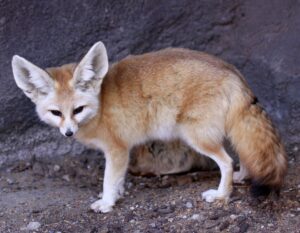
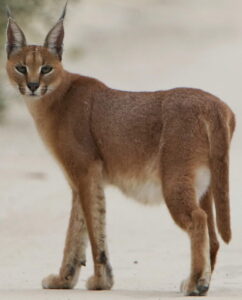
The sand cat is a small, pale wild cat perfectly adapted to life in the desert. It lives in some of the hottest and driest places on Earth and is so elusive that it remains one of the least-studied cats.
Interesting facts
- Thick fur on the soles of its feet protects it from hot and cold sand and hides its footprints.
- Its large ears help it hear prey moving underground.
- Sand cats dig burrows to escape the heat of the day.
- They hunt venomous snakes, such as horned vipers.
- Sand cats have a loud, barking call.
- It is one of the smallest wild cats in the world.
Behaviour
Sand cats are solitary and nocturnal, travelling several kilometres a night in search of prey. They spend the day in burrows or in the shade of shrubs.
Breeding and young
After about 59–67 days, females give birth to two to five kittens in a burrow. Kittens grow quickly and become independent at around a year.
Threats and conservation
Habitat degradation, capture for the pet trade, predation by dogs and prey shortages during droughts.
Where to see it
- Moroccan Sahara, on specialist night tours
- Deserts of the United Arab Emirates and Saudi Arabia
- Arava Valley, Israel (reintroduced)
- Breeding centres such as the Arabian Wildlife Centre, Sharjah
Status source: IUCN Red List. Profile last reviewed September 2026.