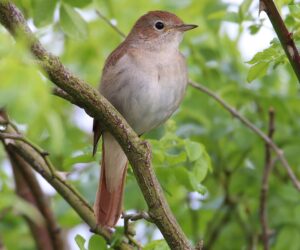
The European robin is a small, round songbird with an orange-red breast. It is one of Europe’s best-loved birds and a regular garden companion.
Interesting facts
- The robin was voted Britain’s national bird in 2015.
- Both males and females have the orange-red breast.
- Robins sing throughout the winter to defend their territories.
- They are fiercely territorial, and fights between rivals can be fatal.
- They follow gardeners and large animals to catch worms and insects disturbed from the soil.
- Robins became linked with Christmas because Victorian postmen wore red uniforms and were nicknamed ‘robins’.
Behaviour
Robins are territorial year-round and sing from prominent perches, even at night near streetlights. In Britain they are tame, while in continental Europe they are shyer woodland birds.
Breeding and young
Females build cup nests in hollows, hedges and even old kettles or sheds, laying four to six eggs. Pairs raise two or three broods a year.
Threats and conservation
The species is common. Harsh winters, cats and window collisions kill many robins.
Where to see it
- Gardens and parks across Britain and Europe
- Woodland and hedgerows
- Garden bird feeders in winter
- Follow a gardener digging a flower bed
Status source: IUCN Red List. Profile last reviewed September 2026.