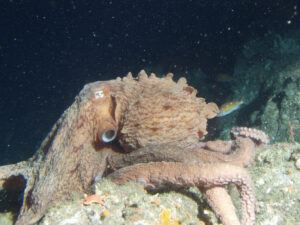
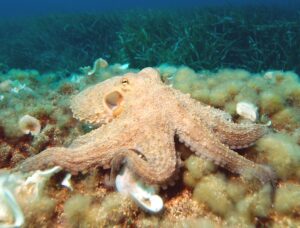
Blue-ringed octopuses are small, beautiful and extremely venomous octopuses of Australia and the western Pacific. Their glowing blue rings are a warning to predators to stay away.
Interesting facts
- Its venom contains tetrodotoxin, made by bacteria in its salivary glands.
- Bites are often painless, so victims may not realise they have been bitten.
- Victims can survive with continuous artificial breathing until the toxin wears off.
- Its blue rings flash brightly as a warning when it is threatened.
- Blue-ringed octopuses are shy and rarely bite unless handled.
- Females carry their eggs under their arms until they hatch.
Behaviour
Blue-ringed octopuses spend much of their time hiding in crevices. They hunt crabs and shrimp, paralysing them with venom. When disturbed, they flash their iridescent rings.
Breeding and young
Females lay about 50–100 eggs and carry them for about a month until they hatch, not eating during this time. They die soon afterwards.
Threats and conservation
Not considered threatened, although collection for the aquarium trade and coastal pollution may affect local populations.
Where to see it
- Rock pools around Sydney and Melbourne (look, never touch)
- Lembeh Strait, Indonesia, on muck dives
- Anilao, Philippines
- Public aquariums in Australia
Status source: IUCN Red List. Profile last reviewed September 2026.