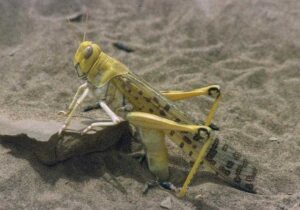
Periodical cicadas are insects of the eastern United States that emerge in huge, synchronised numbers after 13 or 17 years underground. Their emergences are one of North America’s great natural events.
Interesting facts
- Emergences can reach over a million cicadas per acre.
- In 2024, a 13-year brood and a 17-year brood emerged together for the first time since 1803.
- Their prime-numbered life cycles may help them avoid predators with shorter cycles.
- Males sing in loud choruses that can exceed 90 decibels.
- They have striking red eyes.
- Cicadas are harmless to people and are not locusts.
Behaviour
After emerging, nymphs climb trees, shed their skins and become adults. Males gather in trees and sing to attract females.
Breeding and young
Females cut slits in twigs and lay eggs. The hatched nymphs drop to the ground and burrow down to feed on roots for over a decade.
Threats and conservation
Loss of forests and suburban development.
Where to see it
- Forests and suburbs of the eastern and midwestern United States during emergence years
- Illinois, Ohio, Virginia and North Carolina, depending on the brood
- Check brood maps to find the next emergence
- Look for emergence holes under trees in spring
Status source: IUCN Red List. Profile last reviewed September 2026.