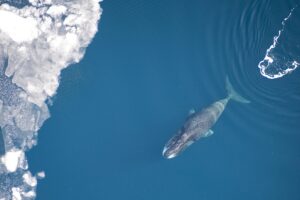
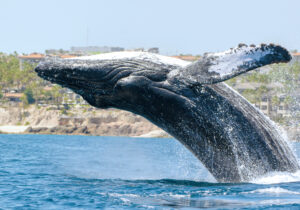
The gray whale is a large baleen whale of the North Pacific, famous for its long coastal migration and its friendly behaviour in Mexico’s breeding lagoons.
Interesting facts
- Gray whales feed by rolling on their side and sucking up mud from the seafloor, straining out prey.
- In Baja California’s lagoons, some gray whales approach boats and let people touch them.
- Their skin is mottled with barnacles and whale lice.
- Gray whales disappeared from the Atlantic centuries ago, but lone whales have recently appeared there and in the Mediterranean.
- Their numbers have varied between about 14,000 and 27,000 in recent years.
- They give birth in warm lagoons in Mexico in winter.
Behaviour
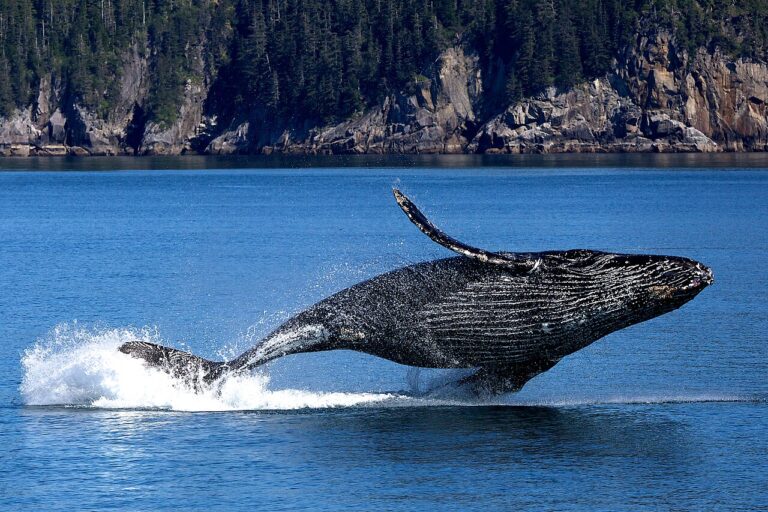
Gray whales migrate close to shore, which makes them easy to watch. They breach, spyhop and travel in small groups.
Breeding and young
After about 13 months, a single calf is born in the warm lagoons of Baja California. Mothers and calves migrate north together in spring.
Threats and conservation
Entanglement in fishing gear, ship strikes, ocean noise, oil and gas development, and changes to Arctic prey caused by warming seas.
Where to see it
- San Ignacio Lagoon and Magdalena Bay, Baja California, Mexico (January to March)
- Monterey Bay and the California coast during migration
- Depoe Bay, Oregon
- Tofino and Vancouver Island, British Columbia
Status source: IUCN Red List. Profile last reviewed September 2026.
Where to see the gray whale
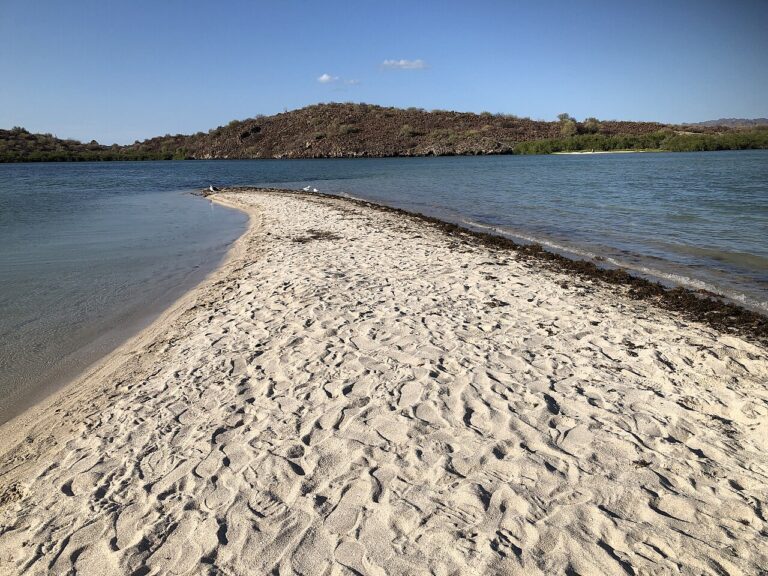 Grey Whale Watching in Baja CaliforniaIn Baja's lagoons, grey whale mothers sometimes bring their calves right up to small boats. When and where…
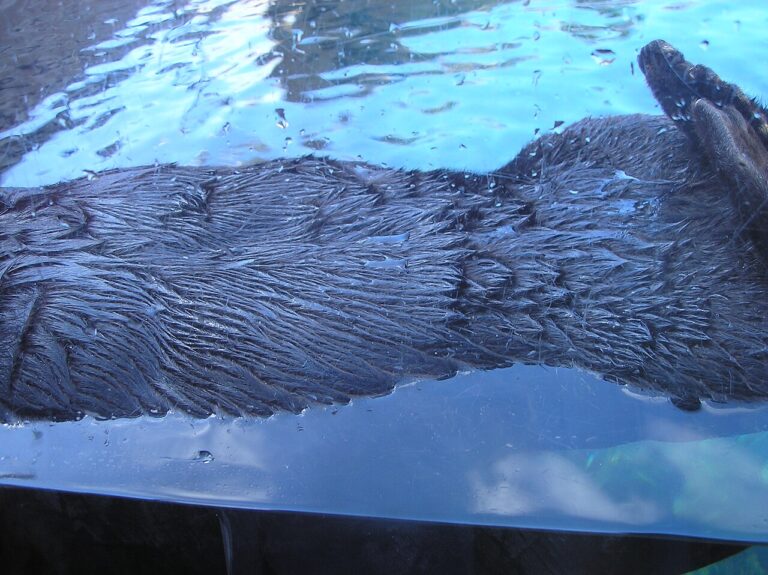 Monterey Bay: Sea Otters, Whales and Kelp ForestsMonterey Bay's deep underwater canyon brings whales close to shore, and sea otters float in its kelp forests.…
 Where to See Whales in North America: A Seasonal GuideFrom Mexico to the Arctic, North America offers whale watching every month of the year. Where to go,…