The Philippine tarsier is a tiny, nocturnal primate with enormous eyes and long, thin fingers. It is found only in the southern Philippines and is a symbol of the island of Bohol.
Interesting facts
- Its eyes cannot move in their sockets, so it turns its head almost 180 degrees to look around.
- Tarsiers communicate using ultrasound, pitched too high for humans to hear.
- It can leap several metres between trees, many times its own body length.
- It is one of the smallest primates in the world.
- It eats only live animal prey, mostly insects.
- Tarsiers are extremely sensitive to stress, and handling or flash photography can harm them.
Behaviour
Tarsiers are nocturnal and spend the day clinging to vertical stems in dense vegetation. At night, they hunt by leaping onto insects and grabbing them with their hands.
Breeding and young
After about six months, a single, well-developed infant is born with its eyes open. It can climb within a day.
Threats and conservation
Habitat loss, capture for the pet trade and poorly managed tourist attractions that stress captive tarsiers.
Where to see it
- Philippine Tarsier Sanctuary, Corella, Bohol (run by the Philippine Tarsier Foundation)
- Forests of Bohol on guided night walks
- Raja Sikatuna Protected Landscape, Bohol
- Avoid roadside attractions where tarsiers are handled or kept in cages
Status source: IUCN Red List. Profile last reviewed September 2026.
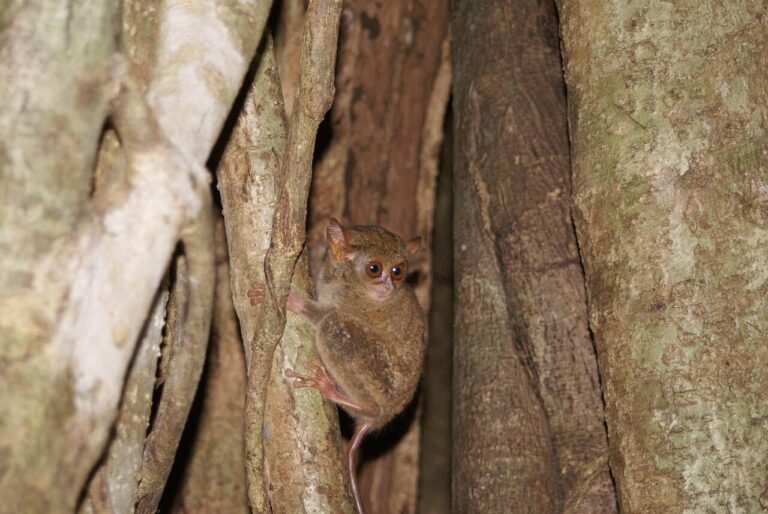 Tangkoko Nature Reserve: Tarsiers and Black Macaques