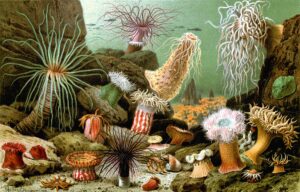
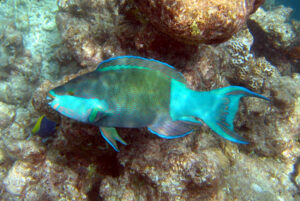
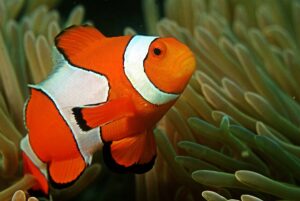
Reef-building corals are small animals that build huge limestone structures over thousands of years. Coral reefs are among the most diverse ecosystems on Earth, protecting coastlines and supporting fisheries for hundreds of millions of people.
Interesting facts
- Each coral is a colony of tiny animals called polyps, related to jellyfish and sea anemones.
- Microscopic algae living inside the polyps provide most of the coral’s food through photosynthesis.
- When water gets too warm, corals expel their algae and turn white, a process called bleaching.
- The Great Barrier Reef is the largest structure built by living organisms.
- Many corals spawn together on a few nights a year, triggered by the moon and water temperature.
- In 2024, scientists confirmed the fourth global coral bleaching event.
Behaviour
Coral polyps extend their tentacles at night to catch plankton, and during the day rely on energy from their algae. Colonies grow slowly, often a few millimetres to a few centimetres a year.
Breeding and young
Corals reproduce both by budding new polyps and by releasing eggs and sperm into the water in mass spawning events. Larvae settle on hard surfaces to start new colonies.
Threats and conservation
Ocean warming and marine heatwaves, ocean acidification, pollution, overfishing, destructive fishing, disease and coastal development.
Where to see it
- Great Barrier Reef, Australia
- Raja Ampat, Indonesia
- The Red Sea, Egypt and Jordan
- Belize Barrier Reef and the Maldives
Status source: IUCN Red List. Profile last reviewed September 2026.
Where to see the reef-building coral
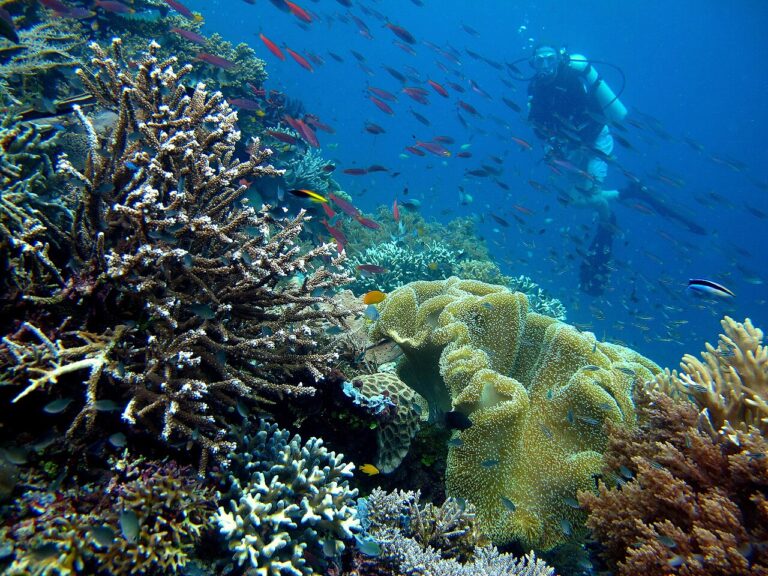 Raja Ampat: Diving the Heart of the Coral TriangleRaja Ampat has the highest marine biodiversity on Earth. How to plan a dive or snorkel trip, from…
 Carbon Footprint of Wildlife Travel: How to Reduce ItWildlife travel funds conservation, but flights have a real climate cost. Practical ways to cut emissions without giving…