The Christmas Island red crab is a bright red land crab found only on a few Indian Ocean islands. Its mass migration to the sea is one of the most spectacular events in the natural world.
Interesting facts
- The migration begins with the first rains of the wet season, usually in October or November.
- Females release their eggs into the sea at high tide just before dawn, timed with the moon.
- Roads are closed and special crab bridges and underpasses help them cross.
- Invasive yellow crazy ants killed millions of red crabs in the 1990s and 2000s.
- A tiny wasp was introduced in 2016 to help control the crazy ants.
- By eating leaf litter, red crabs recycle nutrients in the forest.
Behaviour
Red crabs live in burrows on the forest floor and are active in humid conditions. During the dry season they block their burrows to stay moist.
Breeding and young
After mating on the coast, females release millions of eggs into the sea. About a month later, tiny young crabs march back into the forest.
Threats and conservation
Invasive yellow crazy ants and road traffic.
Where to see it
- Christmas Island during the migration (usually November to December)
- Christmas Island National Park
- Documentaries such as those by Sir David Attenborough
- Check the migration forecast from Parks Australia
Status source: IUCN Red List. Profile last reviewed September 2026.
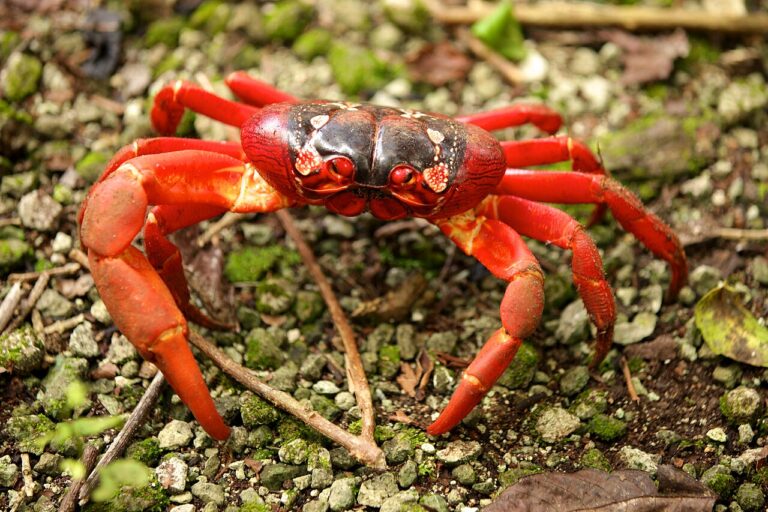 Christmas Island Red Crab Migration