Sea anemones are flower-like animals that attach to rocks and reefs. Despite their plant-like appearance, they are predators that catch prey with stinging tentacles.
Interesting facts
- Sea anemones are related to corals and jellyfish.
- Their tentacles are armed with stinging cells called nematocysts.
- Some anemones can slowly glide across rocks, and a few can even swim.
- Some anemones fight neighbours with special stinging tentacles.
- Many tropical anemones host symbiotic algae that give them energy from sunlight.
- Some anemones may be among the longest-lived animals, possibly living for centuries.
Behaviour
Anemones sit on a sticky base and extend their tentacles to catch passing prey. When disturbed, many pull their tentacles inside.
Breeding and young
Anemones reproduce by releasing eggs and sperm or by splitting and budding to create clones.
Threats and conservation
Coral reef decline, pollution and collection for the aquarium trade.
Where to see it
- Rock pools in Britain and Europe (beadlet anemones)
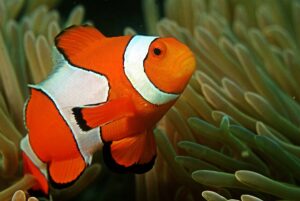
- Coral reefs of Indonesia and the Great Barrier Reef, with clownfish
- Tide pools of the Pacific Northwest (giant green anemones)
- Public aquariums
Status source: IUCN Red List. Profile last reviewed September 2026.